The Africa Agenda
  • Home
  • News
  • Politics
  • Business
  • National
  • Culture
  • Opinion
  • Lifestyle
  • Sports
No Result
View All Result
  • Home
  • News
  • Politics
  • Business
  • National
  • Culture
  • Opinion
  • Lifestyle
  • Sports
No Result
View All Result
The Africa Agenda
No Result
View All Result
  • Home
  • Politics
  • News
  • Business
  • Culture
  • National
  • Sports
  • Lifestyle
  • Travel
  • Opinion
Home Features

Gbiniyiri’s Refugees and the Unfinished Struggle for a Borderless Africa

The Africa Agenda by The Africa Agenda
September 4, 2025
in Features, News
0
Gbiniyiri’s Refugees and the Unfinished Struggle for a Borderless Africa
333
SHARES
2k
VIEWS
Share on FacebookShare on Twitter

By: Moses Desire Kouyo

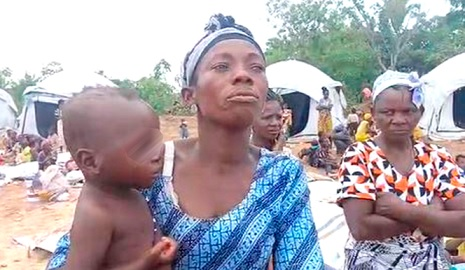
On a quiet Sunday in late August, the people of Gbiniyiri in Ghana’s Savannah Region rose to tend to their farms. By the following week, those same men, women, and children were trudging across the border into Côte d’Ivoire, refugees in a land not their own.

The Interior Minister, Mubarak Mohammed Muntaka, has confirmed the numbers: 13,253 Ghanaians displaced across the Ivorian border, 31 lives lost, and 12 communities torn apart. The National Disaster Management Organisation (NADMO) estimates that more than 48,000 people have been affected by the violence, with over 14,000 fleeing to Burkina Faso and Côte d’Ivoire. Families have abandoned their farms, animals, and harvests, creating a shadow of hunger that now looms over the entire district.

On the ground, 700 military and police officers have been deployed, and government emissaries are shuttling between traditional authorities to restore calm. Yet calm, in this context, is only a fragile word. For the families now in Ivorian villages, sleeping on mats in borrowed compounds, calm is a luxury they can no longer claim.

The Fragility of Borders

Gbiniyiri is not an isolated tragedy. It is a symptom of a deeper African problem: borders that divide communities more than they protect them. Colonial boundaries sliced through ethnic homelands, trade routes, and shared histories. Today, these same artificial lines are still producing conflict and displacement.

This is not the first time Ghanaians have found themselves refugees. In 1994, during the Konkomba–Nanumba conflict, thousands fled across northern borders into Togo. Côte d’Ivoire itself has hosted waves of refugees from Liberia, Sierra Leone, and Burkina Faso. The pattern is depressingly familiar: an eruption of violence, hurried crossings, a humanitarian scramble, and then, silence.

But the Gbiniyiri displacement raises a painful question: How can Africans still be strangers to one another on African soil? Why must a Ghanaian farmer seeking safety in Côte d’Ivoire be called a “refugee” instead of a brother?


The Numbers Behind the Crisis

The statistics paint a bleak picture. Across the continent, more than 40 million Africans are currently displaced, internally or across borders. In 2023 alone, 7.5 million new displacements were recorded in Africa due to conflict and violence. Sudan’s civil war has produced Africa’s largest refugee crisis in recent history, with nearly 10 million people uprooted. In Burkina Faso, jihadist violence has displaced over 2 million people, some spilling into northern Ghana and Togo. Ethiopia’s Tigray war, Nigeria’s farmer–herder conflicts, and Mozambique’s insurgency add to the tally.

Gbiniyiri, then, is not an exception, it is part of a continental emergency.


ECOWAS, AU, and the Illusion of Integration

On paper, West Africa has one of the world’s most ambitious free movement protocols. ECOWAS guarantees citizens the right to enter, reside, and establish businesses in any member state. The African Union, through the Free Movement Protocol and the African Continental Free Trade Area (AfCFTA), envisions a borderless Africa by 2063.

But here lies the hypocrisy: while officials praise Pan-African unity at summits, the lived reality on the ground is suspicion, bureaucracy, and division. Only four African countries—Benin, The Gambia, Seychelles, and Rwanda—offer visa-free access to all Africans. The Free Movement Protocol has been signed by 33 states, but only four have ratified it, far short of the 15 required for enforcement.

In the meantime, a Ghanaian trader still needs permits and bribes to move tomatoes across the Burkina Faso border, and an African billionaire like Aliko Dangote still requires 35 visas to travel across his own continent.

The gap between vision and reality is not just embarrassing, it is deadly.


Pan-Africanism Delayed Is Pan-Africanism Denied

Kwame Nkrumah warned us in 1963 that political independence without economic and social integration would leave Africa weak and vulnerable. He was right. Sixty-two years later, Africans are still running—sometimes from hunger, sometimes from conflict, sometimes from poverty—but always across borders that were never meant for them.

To tell Gbiniyiri’s refugees to wait until 2063 for a borderless Africa is an insult. By then, today’s children will be middle-aged. Many will have lived their entire lives as witnesses to Africa’s disunity. The promises of 2063 mean nothing to a mother nursing her child in a temporary shelter in Côte d’Ivoire today.


What Must Be Done Now

  1. Urgent humanitarian support – ECOWAS and the AU must mobilize resources to support Gbiniyiri’s refugees immediately, not leave the burden to Ghana and Côte d’Ivoire alone.
  2. Conflict resolution mechanisms – Traditional authorities, local government, and civil society must be empowered to mediate land disputes before they spiral into mass violence.
  3. Accelerate free movement protocols – The AU must push member states to ratify the Free Movement Protocol and remove bureaucratic barriers to intra-African mobility.
  4. Invest in resilience – Food insecurity looms large in conflicts like Gbiniyiri’s. Regional strategies on agriculture and rural livelihoods must be prioritized to prevent displacement before it begins.
  5. Pan-African solidarity in practice – Beyond speeches, African leaders must commit to treating displaced Africans as citizens of the continent, not as unwanted burdens.

The Human Face of Africa’s Unfinished Liberation

In the coming weeks, Gbiniyiri will fade from headlines. But for the 13,253 Ghanaians in Ivorian border villages, the nightmare will continue. Their farms will wither. Their children will grow up in displacement. Their dignity will be tested by poverty and neglect.

And unless we act, they will join the silent millions of Africans who live as strangers in Africa.

The true measure of Pan-Africanism is not in summit declarations or anniversaries. It is in whether a displaced Ghanaian in Côte d’Ivoire is treated as a brother, not a refugee. It is in whether Africa responds to Gbiniyiri not as Ghana’s problem, but as a continental wound.

Until then, the Gbiniyiri story is not just about land. It is about Africa’s unfinished struggle for unity and the urgent need to make Pan-Africanism real, today, not in 2063.

The Africa Agenda

The Africa Agenda

Related Posts

Ghana Month Must Mean More Than Celebration: Scrap the Visa Fees and Honour Nkrumah in Practice
Editorial

Ghana Month Must Mean More Than Celebration: Scrap the Visa Fees and Honour Nkrumah in Practice

March 1, 2026
Africans Rising Welcomes Removal of Kotoka’s Name from Ghana’s Main Airport, Calls for Visa-Free Africa
News

Africans Rising Welcomes Removal of Kotoka’s Name from Ghana’s Main Airport, Calls for Visa-Free Africa

March 1, 2026
The Crocodile’s Clock: Mnangagwa, Succession Anxiety, and the Slow Death of Zimbabwe’s Democracy
Editorial

The Crocodile’s Clock: Mnangagwa, Succession Anxiety, and the Slow Death of Zimbabwe’s Democracy

October 20, 2025
Next Post
Gbiniyiri’s Refugees and the Unfinished Struggle for a Borderless Africa

Over 13,000 Ghanaians Flee to Côte d’Ivoire After Gbinyiri Land Dispute – Interior Minister Confirms

Why Gen Zs Should Care About a Borderless Africa

Why Gen Zs Should Care About a Borderless Africa

The Crocodile’s Clock: Mnangagwa, Succession Anxiety, and the Slow Death of Zimbabwe’s Democracy

The Crocodile’s Clock: Mnangagwa, Succession Anxiety, and the Slow Death of Zimbabwe’s Democracy

Leave a Reply Cancel reply

Your email address will not be published. Required fields are marked *

Categories

  • Business
  • Editorial
  • Features
  • History
  • News
  • Opinion
  • Politics
  • Travel

Topics

#africa Africa Africa Agenda AfricanAgenda Africa Rising Akufo Addo Bassirou Diomaye Faye Borderless Borderless Africa BRAZIL Burundi Central African Republic CLIMATE Congo COP 29 Diamond Donald Trump Endbadgovernment Ethiopia galamsey Genocide Ghana Kenya Libya Malaysia Mauritius News News Ghana Nigeria Ramaphosa Russia Ruto Rwanda senegal South Africa Sudan Sumiyu theafricaagenda TheafricanAgenda The Phoenix President Tum Daim Zainuddin Tunisia UK UN USAID
No Result
View All Result
Ghana Month Must Mean More Than Celebration: Scrap the Visa Fees and Honour Nkrumah in Practice

Ghana Month Must Mean More Than Celebration: Scrap the Visa Fees and Honour Nkrumah in Practice

March 1, 2026
Africans Rising Welcomes Removal of Kotoka’s Name from Ghana’s Main Airport, Calls for Visa-Free Africa

Africans Rising Welcomes Removal of Kotoka’s Name from Ghana’s Main Airport, Calls for Visa-Free Africa

March 1, 2026
The Crocodile’s Clock: Mnangagwa, Succession Anxiety, and the Slow Death of Zimbabwe’s Democracy

The Crocodile’s Clock: Mnangagwa, Succession Anxiety, and the Slow Death of Zimbabwe’s Democracy

October 20, 2025
  • About
  • Advertise
  • Careers
  • Contact

© 2026 The Africa Agenda - Sponsored by The Africa Agenda.

No Result
View All Result
  • Home
  • Politics
  • News
  • Business
  • Culture
  • National
  • Sports
  • Lifestyle
  • Travel
  • Opinion

© 2026 The Africa Agenda - Sponsored by The Africa Agenda.