By Moses Desire Kouyo
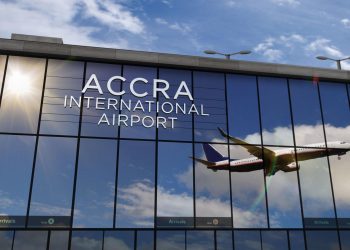
At dawn in Accra, the departures hall at Accra International Airport begins to fill with the familiar choreography of modern African mobility, queues, passports, quiet anticipation. A young entrepreneur from Dakar checks her documents for the third time. A software developer from Nairobi scrolls through emails about a potential partnership in West Africa. A trader from Lomé clutches a worn bag, her livelihood tied to borders she crosses more often than she can count.
For decades, these journeys have been defined by friction, fees, paperwork, uncertainty, and, often, quiet humiliation.
On May 25, 2026, Ghana intends to change that story.
With the announcement of a visa-free regime for all African passport holders, anchored in a digital e-visa system, Ghana is not merely introducing a policy. It is intervening in one of the most persistent contradictions of the African condition: that Africans remain strangers at African borders.

The Weight of a Stamp
To understand the significance of Ghana’s decision, one must begin with the lived reality of movement on the continent.
An African passport is, in many cases, a document of limitation rather than liberation.
Across Africa, visa requirements remain dense and uneven. A Kenyan may need clearance to enter parts of West Africa. A Nigerian entrepreneur may face delays traveling to Southern Africa. A Cameroonian student may abandon academic opportunities due to prohibitive visa costs.
These are not isolated inconveniences. They are systemic barriers.
They fragment markets.
They isolate talent.
They quietly erode the promise of continental unity.
“I can sell my work in Europe more easily than in some African countries,” a Ghanaian creative once remarked at a cultural forum in Accra. The statement, though anecdotal, captures a broader truth: Africa’s internal borders often function more rigidly than its external ones.
Ghana’s policy is a direct challenge to that reality.
Nkrumah’s Ghost in the Machine
There is something almost poetic about the timing.

Africa Day, May 25 is not just a commemoration; it is a reminder of unfinished work. It marks the founding of the Organization of African Unity, now the African Union, and the birth of a political imagination that saw beyond colonial boundaries.
Kwame Nkrumah, Ghana’s first president, envisioned an Africa where movement was natural, not negotiated. Where identity transcended passports. Where unity was infrastructural, not rhetorical.
Yet, for decades, that vision has struggled against the inertia of nation-states each guarding sovereignty, each wary of opening too far, too fast.
Ghana’s 2026 visa-free initiative reactivates that vision but with a 21st-century twist.
This is not border abolition. It is border re-engineering.
Through an e-visa platform linked to international security databases and API-PNR systems, Ghana is attempting something nuanced: making borders smarter, not harder.
Africans will not pay visa fees. But they will be screened. Entry will be facilitated, not automatic.
It is a model that acknowledges a hard truth: Pan-Africanism must now operate within a digital, security-conscious world.
The Human Geography of Opportunity
Policies often live and die in their implementation but their meaning is first felt in human terms.
Consider Aïssatou, a textile entrepreneur from Senegal, who has long eyed Ghana’s growing fashion ecosystem. Previously, each trip required planning around visa costs and timelines—small obstacles that accumulate into missed opportunities.
Or Daniel, a Ugandan software engineer seeking partnerships in West Africa’s fintech space. His challenge has never been lack of ideas, but lack of access.
Or Ama, a cross-border trader moving goods between Togo and Ghana, whose daily crossings expose her to informal fees, delays, and the unpredictability of border enforcement.
For individuals like these, Ghana’s policy is not abstract diplomacy. It is practical liberation.
Lower costs mean more movement.
More movement means more exchange.
More exchange means a denser, more interconnected Africa.
This is how integration happens, not only through treaties, but through people.
Trade Without Movement Is an Illusion
The African Continental Free Trade Area (AfCFTA) is often celebrated as a historic milestone—a single market of over a billion people. But markets do not move themselves.
People do.
Traders negotiate deals.
Engineers build partnerships.
Artists carry culture across borders.
Students carry ideas.
Without mobility, AfCFTA risks becoming an elegant framework constrained by immobile realities.
Ghana’s visa-free policy is, therefore, not just about travel, it is about unlocking the human infrastructure of trade.

By reducing friction at the level of entry, Ghana is attempting to align policy with economic ambition.
But alignment at a continental scale remains uneven.
The Politics of Fear and Control
If the benefits of free movement are so clear, why has Africa hesitated?
The answer lies in a complex interplay of history, politics, and perception.
Post-colonial states inherited borders designed for extraction, not integration. These borders became symbols of sovereignty, hard-won and fiercely protected.
Security concerns further complicate the picture. Governments fear transnational crime, irregular migration, and the strain on public services.
There is also an unspoken anxiety: inequality between African economies.
Wealthier or more stable countries worry about becoming magnets for migration. Less stable countries worry about losing talent.
These fears are not entirely unfounded but they are often overstated.
What Ghana is proposing is not uncontrolled migration, but managed mobility.
By embedding screening mechanisms within a digital architecture, it is attempting to replace blanket restrictions with targeted intelligence.
The shift is subtle but profound: from exclusion by default to inclusion by design.
A Continental Mirror
Ghana’s decision does something rare in African policy, it forces a comparison.
It asks other nations, implicitly: if this is possible, why not elsewhere?
Some countries, Rwanda, Seychelles, The Gambia have taken steps toward openness. Others remain cautious, citing capacity constraints or political sensitivities.
But the longer the disparity persists, the more uneven Africa’s integration becomes.
A truly borderless Africa cannot be built through isolated experiments. It requires convergence.
And convergence requires leadership.
Ghana has chosen to lead.
Whether others will follow remains the defining question.
Between Idealism and Execution
Bold policies are easy to announce. They are harder to sustain.
Ghana’s initiative will face immediate tests:
- Can the e-visa system handle scale without delays?
- Will security systems remain robust and corruption-resistant?
- Will infrastructure, airports, transport, services, keep pace with increased movement?
- Will public sentiment within Ghana remain supportive?
These are not trivial concerns.
Pan-Africanism, in practice, is not just an idea, it is a system that must function daily, reliably, and fairly.
If Ghana succeeds, it will offer a working model for the continent.
If it falters, skeptics will seize the moment to reinforce caution.
Rewriting the Narrative
In a world increasingly defined by closed borders and rising nationalism, Ghana’s move offers a counter-narrative.
It suggests that Africa can chart a different path—one that prioritizes connection over exclusion, cooperation over suspicion.
For too long, Africa has been described as fragmented. But fragmentation is not destiny—it is design. And design can be changed.
What Ghana is attempting is precisely that: a redesign of how Africans encounter one another.
The Beginning of Movement
There is a quiet power in movement.
When people move, ideas move.
When ideas move, economies evolve.
When economies evolve, societies transform.
Ghana has opened a door, not fully, not without conditions, but meaningfully.
The question now is not whether the door exists.
It is whether Africa is ready to walk through it.
Because the future of the continent will not be decided at its borders but by how willing it is to transcend them.