Tag: Sudan

  • The Dream of a Borderless Africa: A Historical Perspective and a Call to Action for the Youth

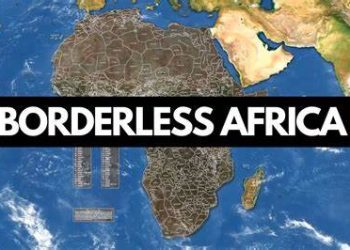
    The Dream of a Borderless Africa: A Historical Perspective and a Call to Action for the Youth

    For centuries, Africa existed as a rich mosaic of cultures, communities, and relationships, thriving without the arbitrary borders that now define it. Prior to the colonial era, trade, migration, and cultural exchange flourished across the continent, creating interconnected societies that celebrated diversity. The borders we recognize today were largely imposed during the Berlin Conference of 1884-85, where European powers divided the continent with little regard for existing ethnic, cultural, or social ties. This fragmentation disrupted family networks and cultural communities, sowing seeds of division that have persisted long after the end of colonial rule.

    The legacy of these colonial borders continues to shape African lives today. Intra-African trade remains astonishingly low, at just 15% compared to 60% in Europe. The barriers erected between nations hinder economic growth and limit opportunities for collaboration. Additionally, the restrictive visa regimes often leave African travelers struggling to navigate the complex requirements just to cross a border. This reality is starkly evident when we consider the experiences of those trying to attend events or engage in business across African nations—an ordeal that stands in stark contrast to the fluidity enjoyed by citizens of other regions.

    As we look to the future, the vision of a borderless Africa becomes not just an ideal, but a necessity for the continent’s young people. The youth represent the largest demographic on the continent and are uniquely positioned to drive change. A borderless Africa holds numerous promises:

    1. Enhanced Mobility: Envision a continent where young Africans can travel freely from one country to another without the burden of visas. This unrestricted mobility would allow for greater cultural exchange, knowledge sharing, and the fostering of cross-border friendships and collaborations.
    2. Economic Growth and Innovation: With barriers removed, young entrepreneurs could access broader markets, enabling them to launch businesses and create jobs. By fostering regional trade, Africa can become a powerhouse of innovation and economic dynamism, breaking free from reliance on external powers.
    3. Cultural Renaissance: A borderless Africa would encourage the celebration of our diverse heritages. Young Africans can engage in cultural exchanges that honor our histories while building solidarity among nations. This renewed sense of identity can strengthen pan-Africanism, encouraging cooperation on issues that affect us all.
    4. Political Engagement: The youth must advocate for policies that support free movement and regional integration. By participating in political processes and pushing for the ratification of agreements like the African Union’s protocol on free movement, young people can shape a future that transcends arbitrary borders.
    5. Reviving Historical Connections: Breaking down borders can help revive the historical connections that existed before colonialism. Communities can reconnect, fostering unity and mutual understanding across the continent.

    The African Union’s protocol on free movement, adopted in 2018, is a crucial step toward realizing this vision. However, it has seen limited ratification, with only a few countries fully committing to its principles. This is where the energy and passion of Africa’s youth are needed. We must mobilize and advocate for a more interconnected continent, leveraging social media and grassroots movements to amplify our voices.

    In conclusion, the dream of a borderless Africa is not merely a nostalgic longing for a pre-colonial past; it is a forward-looking vision that holds the key to our collective empowerment and prosperity. As we navigate the complexities of our current realities, let us work together to dismantle the barriers that divide us and forge a unified future. The time is now for Africa’s youth to take action, to champion the #BorderlessAfrica movement, and to turn this dream into a tangible reality. Together, we can redefine what it means to be African in a borderless world, reclaiming our shared heritage and building a continent that thrives on unity and collaboration.

  • Mystery Deepens Around Downed Cargo Plane in Sudan Amid Ongoing Conflict

    Mystery Deepens Around Downed Cargo Plane in Sudan Amid Ongoing Conflict


    The mystery surrounding a cargo plane crash in Sudan intensified on Tuesday, as authorities revealed the aircraft had been de-registered in Kyrgyzstan. The Ilyushin Il-76, reportedly shot down by the paramilitary Rapid Support Forces (RSF) over war-torn Darfur, raises questions about who was operating the plane late at night.

    The aircraft had previously been linked to allegations of the United Arab Emirates (UAE) arming the RSF, a claim the UAE denies despite mounting evidence. The plane’s crash on Monday highlights the ongoing chaos in Sudan since the RSF and the military began fighting in April 2023, a conflict that has claimed over 24,000 lives, displaced millions, and left many on the brink of starvation.

    Video footage posted online shows RSF fighters near the plane’s wreckage, claiming responsibility for downing it with a surface-to-air missile. Identity documents found at the crash site included a Russian passport and an ID card connected to a UAE-based company, whose contact details have since been disconnected. The Russian Embassy in Sudan has launched an investigation into the incident.

    A safety card from the wreckage indicated that the plane belonged to New Way Cargo of Kyrgyzstan. However, Zuurakan Kadyrova, a representative of New Way Cargo, stated that their lease on the aircraft expired at the end of 2023, and they have no further records of its activities since. She expressed condolences to the crew and their families.

    Kyrgyz authorities confirmed that the plane had been removed from their registry in January 2024 and transferred to Sudan’s registry. No Kyrgyz nationals were involved in the crash.

    The RSF maintains that the aircraft was operated by the Sudanese military, allegedly flying “jihadist militia groups.” The RSF claims to have retrieved the plane’s black box, along with key documents revealing its operations, but these have not been made public.

    Sudan’s instability has deepened since the ousting of longtime dictator Omar al-Bashir in 2019. A brief attempt at transitioning to democracy was cut short by a military coup in October 2021, led by Gen. Abdel-Fattah Burhan and Gen. Mohammed Hamdan Dagalo of the RSF, who are now at war with each other. Al-Bashir, who faces charges of genocide at the International Criminal Court, used the Janjaweed militias—now evolved into the RSF—to commit atrocities in Darfur, and reports suggest similar ethnic violence is once again occurring.

    A recent report by Conflict Observatory, a group monitoring the war in Sudan, linked New Way Cargo’s Ilyushin Il-76 aircraft to weapons transfers from the UAE to the RSF. These arms reportedly arrived via Chad’s Aéroport International Maréchal Idriss Deby, near where the plane was shot down. The UAE claims the flights were for humanitarian aid, supporting a local hospital.

    As Sudan’s conflict rages on, officials from the Sudanese government, currently based in Port Sudan, have yet to comment on the incident. Meanwhile, humanitarian conditions continue to deteriorate, with over 25 million people—about half of Sudan’s population—now in need of urgent assistance. “Sudanese children are surviving bombs and bullets, only to face the threat of starvation and disease,” said Mohamed Abdiladif, interim country director for Save the Children in Sudan.

  • Kais Saied Secures Landslide Victory in Tunisia’s Presidential Election Amid Concerns of Authoritarianism

    Kais Saied Secures Landslide Victory in Tunisia’s Presidential Election Amid Concerns of Authoritarianism

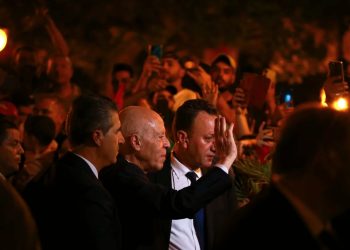
    President Kais Saied has clinched a decisive victory in Tunisia’s recent presidential election, receiving 90.7% of the vote, according to the Independent High Authority for Elections. This win consolidates his power following a term marked by significant political upheaval and the imprisonment of numerous opponents.

    Saied’s election comes against a backdrop of growing concerns regarding the state of democracy in Tunisia, the birthplace of the Arab Spring. Critics warn that the election reflects a trend toward authoritarianism, reminiscent of the era under former President Zine El Abidine Ben Ali. University of Tunis law professor Sghayer Zakraoui remarked that the political landscape is shifting back toward “the absolute power of a single man,” with Saied positioning himself as a leader with a “messianic message.”

    Saied’s closest challenger, businessman Ayachi Zammel, garnered just 7.4% of the vote, having spent much of the campaign in prison due to multiple sentences for election-related offenses. The election, however, was overshadowed by a dismal voter turnout of only 28.8%, signaling widespread apathy among Tunisia’s 9.7 million eligible voters. This participation rate is notably lower than in previous elections, highlighting growing disillusionment with the political process.

    The election process faced significant challenges, with many of Saied’s most prominent opponents barred from running. Opposition parties boycotted the election, labeling it a sham in light of Tunisia’s deteriorating political environment and the increasing authoritarian tendencies of Saied’s administration.

    Despite the electoral victory, analysts suggest Saied’s win may undermine rather than strengthen his authority. Tarek Megerisi of the European Council on Foreign Relations commented that the president will return to office “undermined” by the electoral context.

    Amidst this political turmoil, critics remain resolute in their opposition. Freelance filmmaker Amri Sofien expressed a sentiment of despair, stating, “It’s possible that after 20 years our kids will protest… There is no hope in this country.”

    This disillusionment contrasts sharply with the optimism that characterized Tunisia in 2011, when citizens successfully ousted Ben Ali, demanding “bread, freedom, and dignity.” Following that revolution, the country made strides toward democracy, implementing a new constitution and establishing institutions aimed at promoting justice and accountability.

    However, subsequent years saw rising political infighting, economic challenges, and social unrest. Saied, initially perceived as an outsider promising to combat corruption, capitalized on this discontent to win his first term in 2019. His consolidation of power in 2021, which included suspending parliament and rewriting the constitution, drew comparisons to a coup among critics.

    Following the approval of his proposed constitution in a referendum, authorities intensified repression against dissent, targeting political opponents, activists, and journalists. The crackdown has raised alarms about the future of civil society in Tunisia, with prominent figures imprisoned on various charges, including inciting disorder and violating controversial laws aimed at curbing misinformation.

    As Tunisia navigates this precarious political landscape, the implications of Saied’s recent electoral victory remain uncertain, with many fearing for the country’s democratic future.

  • Ghana’s Agricultural Exports at Risk from Illegal Mining Activities

    Ghana’s Agricultural Exports at Risk from Illegal Mining Activities

    The Importers and Exporters Association of Ghana has issued a serious warning about the potential threat illegal mining activities, commonly known as “galamsey,” pose to the country’s agricultural exports. The association emphasizes that urgent action is needed to address this issue, or Ghana may face significant challenges in selling its food products on the international market, particularly in Europe.

    Concerns have arisen following reports that Ghanaian agricultural exports, including key staples like cocoa, yams, and vegetables, have been found to contain harmful heavy metals. These pollutants, such as mercury, are introduced into the environment through illegal mining operations that utilize toxic chemicals to extract gold and other minerals. As these contaminants seep into water bodies and farmland, they pose serious risks to food safety, especially in regions with stringent regulations like the European Union.

    In a recent interview with Accra based Citi News, Samson Asaaki Awingobit, president of the Importers and Exporters Association, highlighted the gravity of the situation. He noted that the EU enforces rigorous food safety standards, and any sign of contamination could lead to an outright ban on Ghanaian agricultural exports.

    Such a ban would have devastating economic repercussions for Ghana, as the EU is one of the country’s largest trading partners. The association’s alarm serves as a call to action for authorities to combat illegal mining and safeguard the integrity of Ghana’s agricultural sector.

  • UK Reaches Agreement to Hand Over Chagos Islands to Mauritius, Ending Decades of Colonial Dispute

    UK Reaches Agreement to Hand Over Chagos Islands to Mauritius, Ending Decades of Colonial Dispute

    The United Kingdom has agreed to return control of the Chagos Islands to Mauritius, marking the end of a lengthy and controversial dispute over Britain’s last African colony. The announcement came after 13 rounds of negotiations that began in 2022, following rulings by the International Court of Justice (ICJ) and the UN General Assembly that recognized Mauritius’ sovereignty over the islands.

    The Chagos archipelago was separated from Mauritius by the UK before Mauritius gained independence in 1968, forming a new colony called the British Indian Ocean Territory (BIOT). This separation was ruled unlawful by international bodies, but the UK had previously dismissed these judgments, claiming they were non-binding.

    In the 1960s and 1970s, the UK and the US forcibly expelled around 1,500 to 2,000 Chagossians to establish a military base on Diego Garcia, the largest island in the chain. The islanders were displaced not only from Diego Garcia but also from Peros Banhos and Salomon.

    Under the new agreement, the UK will maintain control of the UK-US military base on Diego Garcia. However, Chagossians have expressed frustration at being excluded from the negotiations, with many feeling powerless in decisions regarding their homeland’s future. Community groups like Chagossian Voices have demanded full inclusion in the drafting of the treaty.

    Despite this agreement, tensions remain over the lack of consultation with the displaced islanders, who seek recognition and a say in the future of the archipelago.

    The United Kingdom has agreed to return control of the Chagos Islands to Mauritius, marking the end of a lengthy and controversial dispute over Britain’s last African colony. The announcement came after 13 rounds of negotiations that began in 2022, following rulings by the International Court of Justice (ICJ) and the UN General Assembly that recognized Mauritius’ sovereignty over the islands.

    The Chagos archipelago was separated from Mauritius by the UK before Mauritius gained independence in 1968, forming a new colony called the British Indian Ocean Territory (BIOT). This separation was ruled unlawful by international bodies, but the UK had previously dismissed these judgments, claiming they were non-binding.

    In the 1960s and 1970s, the UK and the US forcibly expelled around 1,500 to 2,000 Chagossians to establish a military base on Diego Garcia, the largest island in the chain. The islanders were displaced not only from Diego Garcia but also from Peros Banhos and Salomon.

    Under the new agreement, the UK will maintain control of the UK-US military base on Diego Garcia. However, Chagossians have expressed frustration at being excluded from the negotiations, with many feeling powerless in decisions regarding their homeland’s future. Community groups like Chagossian Voices have demanded full inclusion in the drafting of the treaty.

    Despite this agreement, tensions remain over the lack of consultation with the displaced islanders, who seek recognition and a say in the future of the archipelago.

  • Libya’s National Oil Corporation Resumes Production After Two-Month Halt Amid Political Crisis

    Libya’s National Oil Corporation Resumes Production After Two-Month Halt Amid Political Crisis

    Libya’s National Oil Corporation (NOC) announced on Thursday that it is resuming full oil production, nearly two months after operations at its key oil fields were halted due to a political crisis. The NOC confirmed that production will restart at the Sharara and El-Feel oil fields and that exports from Es Sider, the country’s largest port, will also resume.

    In August, the NOC had declared a “force majeure,” a legal clause allowing it to suspend contracts due to extraordinary circumstances. The shutdown was attributed to the Fezzan Movement, a local protest group, amid a broader dispute between rival authorities over governance of the central bank, which is responsible for distributing Libya’s oil revenues.

    Recently, the political situation improved following the parliament’s appointment of a new governor to the central bank, alleviating some of the tensions. The NOC emphasized that it can now resume crude oil production and exports to its customers. Libya produces over 1.2 million barrels of oil per day, with Sharara being the largest field, producing up to 300,000 barrels daily.

    The country has been engulfed in political turmoil since the 2011 NATO-backed uprising that led to the overthrow and death of former leader Muammar Gaddafi, resulting in a divided government supported by various militias and foreign powers.

  • Urgent Need for Debt Cancellation Amid Africa’s Climate Finance Crisis

    Urgent Need for Debt Cancellation Amid Africa’s Climate Finance Crisis


    Africa is currently facing a significant financial challenge, spending almost three times more on servicing external debt than it receives in climate finance. This alarming disparity highlights the urgent need for debt cancellation and a reevaluation of the continent’s climate finance strategies.

    In early October, environment ministers from various African nations convened in Côte d’Ivoire for the African Ministerial Conference on the Environment (AMCEN). The conference focused on addressing environmental governance and establishing unified positions for international climate negotiations. A central topic was the funding gap for climate initiatives; African countries currently receive around $30 billion annually in climate finance but require approximately $277 billion to implement their national climate plans effectively and meet their 2030 climate goals.

    Ali Mohamed, Chair of the African Group of Negotiators on Climate Change (AGN), emphasized the necessity of establishing a new climate finance target at the upcoming COP29 climate talks in November. He proposed that the New Quantified Goal on Climate Finance (NCQG) should mobilize at least $1.3 trillion annually for developing countries by 2030. This ambitious figure should serve as a baseline, subject to periodic reviews based on evolving needs and available data .

    The discussions also underscored the need for equity, accountability, and transparency in managing climate funds. African ministers argued for a transition from climate financing that primarily relies on loans—often exacerbating countries’ debt burdens—to funding in the form of grants and concessional financing .

    The situation is particularly dire for many African nations, which are grappling with deepening debt crises. In 2023, external debt payments reached $85 billion, nearly triple the amount received in climate finance. This crisis poses severe limitations on their capacity to address pressing needs, with debt servicing expected to consume at least 18.5% of national budget revenues in 2024 .

    Countries such as Zambia and Ghana have faced severe repercussions from this debt burden. Zambia made headlines when it became the first African nation to default on its debt during the COVID-19 pandemic, with debt servicing absorbing over 33% of government revenues. Ghana reported that half of its total revenues and over 70% of tax revenues were allocated to debt repayments. Meanwhile, in Kenya, nearly 70% of domestic revenues were being spent on servicing debts. This debt strain severely hampers African governments’ ability to invest in vital areas like public health, education, and climate action.

    Moreover, the current financial climate makes borrowing on international markets prohibitively expensive for heavily indebted nations. Interest rates for high-debt countries average around 6.5%, compared to 3% for more stable nations. Such unfavorable borrowing terms create significant barriers to mobilizing the necessary finance for renewable energy and climate adaptation projects .

    In light of these challenges, experts argue that addressing the debt crisis is critical for enabling African countries to invest in climate solutions. High-polluting countries have long delayed fulfilling their environmental responsibilities, and they must provide reparations, including debt cancellation. African negotiators should pursue debt forgiveness for historical debts owed to institutions like the IMF and World Bank, viewing this as compensation for climate impacts caused by developed nations.

    Additionally, where debt cancellation is not feasible, there should be demands for technology and knowledge transfers from wealthier nations to help African countries develop sustainable practices. This could involve sharing advanced renewable energy technologies, climate resilience tools, and sustainable agricultural practices .

    A robust movement advocating for debt cancellation and innovative financing solutions is already gaining traction among African governments and civil society groups. Organizations such as the Jubilee Debt Campaign and movements like Debt for Climate are working to link debt relief efforts to climate resilience. Furthermore, the African Union and the African Development Bank are calling for large-scale debt relief to support sustainable development.

    However, achieving these goals requires stronger international cooperation and political will from wealthier nations. Moving forward, African governments and their allies must advocate for radical solutions to the debt crisis, including unconditional debt cancellation and the establishment of global climate reparations funds. These actions would significantly enhance African nations’ ability to invest in climate projects and secure a sustainable future for the continent .

  • Why Africa Must Unite: Kwame Nkrumah’s Vision for Pan-Africanism

    Why Africa Must Unite: Kwame Nkrumah’s Vision for Pan-Africanism

    More than sixty years ago, Kwame Nkrumah articulated a vision for African unity that remains profoundly relevant today. His ideas, outlined in the essay “Why Africa Must Unite,” presented a roadmap for Pan-Africanism, not as a mere cultural or symbolic gesture but as a practical framework to secure African sovereignty and independence. For Nkrumah, the concept of Pan-Africanism extended beyond cultural connections among Black people globally; it was a strategic necessity for the recently decolonized African nations to resist neocolonial exploitation and achieve meaningful development.

    Nkrumah’s Critique of Neocolonialism

    Nkrumah’s argument rested on a critical analysis of neocolonialism—the continued economic and political influence of former colonial powers over African nations. He argued that despite nominal independence, many African states remained economically subservient and politically vulnerable to foreign interests, particularly those of the United States and Europe. This influence perpetuated economic dependency and prevented the full realization of African sovereignty.

    He asserted that the fragmentation of the African continent into small, economically weak states made it easier for neocolonial powers to exploit African resources and maintain control. To counteract this, Nkrumah proposed a union of African states that could leverage their collective strength in defense, foreign policy, and economic development. Such a union would enable African nations to resist external pressures, manage their resources more effectively, and build a robust, self-sufficient economy.

    The Necessity of a Union Government

    Central to Nkrumah’s vision was the establishment of a Union Government of Africa. He believed that a united political and economic front was essential to overcoming the challenges posed by neocolonialism and ensuring the continent’s sustainable development. A Union Government would facilitate coordinated economic planning, foster intra-African trade, and enable collective action in international affairs.Nkrumah emphasized the importance of shared infrastructure in communications, transportation, and industry as foundational elements for a united Africa.

    He also advocated for a common African currency to reduce dependency on foreign currencies and strengthen economic integration across the continent. His vision included the development of a shared defense strategy to protect African sovereignty against external military interventions.

    Challenges and Prospects for Pan-Africanism

    Despite Nkrumah’s compelling arguments, the realization of his vision faced significant challenges. Skeptics of Pan-Africanism often viewed it as either an idealistic dream or an impractical endeavor due to the political, economic, and cultural diversity of African nations. Additionally, the legacy of colonial borders and the differing interests of individual states complicated efforts toward unification.

    However, Nkrumah argued that the benefits of unity far outweighed these challenges. He pointed out that historical examples of successful unifications, such as the formation of the United States, demonstrated that diverse entities could come together to form a powerful and cohesive union. Nkrumah believed that African unity was not only possible but essential for the continent’s future prosperity and independence.

    The Relevance of Nkrumah’s Vision Today

    In the contemporary context, Nkrumah’s call for African unity remains relevant as African nations continue to navigate the complexities of globalization and neocolonial pressures. Recent political developments in countries like Niger, Mali, and Burkina Faso, where anti-neocolonial sentiments have gained momentum, reflect a growing desire for greater autonomy and regional cooperation.Nkrumah’s vision for a united Africa offers a framework for addressing contemporary challenges, such as economic inequality, political instability, and external interference.

    By fostering stronger political and economic ties, African nations can build resilience against external exploitation and create a more equitable and prosperous future for the continent.As Nkrumah eloquently stated, the struggle for African unity is not merely a regional concern but a global imperative. The realization of his vision would not only transform Africa but also contribute to a more just and equitable world order. Thus, Nkrumah’s advocacy for Pan-Africanism serves as a timeless reminder of the potential and necessity of African unity in the quest for true independence and sustainable development.

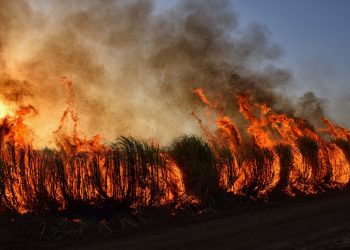
  • Fires Deployed in Sudan as Weapons Destroyed More Towns Than Ever in April, Study Finds

    Fires Deployed in Sudan as Weapons Destroyed More Towns Than Ever in April, Study Finds

  • Sudan’s Humanitarian Crisis: A Nation on the Brink

    Sudan’s Humanitarian Crisis: A Nation on the Brink

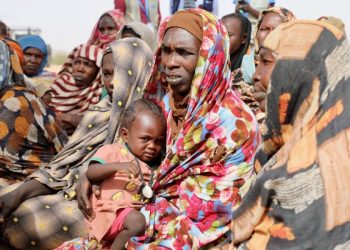
    In the midst of a year-long conflict between rival military factions in Sudan, the nation faces an escalating humanitarian crisis. According to aid agencies, 25 million people, roughly half the population, are in desperate need of assistance. The conflict has compounded existing challenges, including acute food insecurity, with 17.7 million Sudanese facing immediate danger due to lack of food. Of those, 4.9 million are on the brink of famine, emphasizing the urgent need for intervention.

    Women and girls are particularly vulnerable, facing increased risks of gender-based violence and hunger. Agriculture, a vital source of income for most Sudanese, has been severely disrupted as farmers flee the fighting and lose access to essential supplies.

    Displacement has also reached alarming levels, with over 8.6 million people, roughly 16% of the population, forced to flee their homes since the conflict began. Sudan now holds the unfortunate title of hosting the largest displacement crisis globally, with an additional 3 million people already homeless due to previous conflicts, particularly in Darfur.

    The economic fallout from the war is devastating, with the economy contracting by 12% in 2023, according to the World Bank. Infrastructure has been severely damaged, supply lines disrupted, and the formal banking system has collapsed, leaving many without salaries and exacerbating unemployment, which now affects nearly half the population.

    Access to essential services like healthcare and education has also been severely impacted. Despite 11 million Sudanese needing urgent health assistance, 70% of health facilities in conflict-affected areas are either shut down or only partially functional. Outbreaks of diseases such as cholera, measles, malaria, and dengue fever are rampant, further straining an already overwhelmed healthcare system. Additionally, 19 million children are at risk of losing out on their education due to the war, with half of them having been in active war zones over the past year.

    Despite the pressing need for aid, access remains a significant challenge. Both the army and the Rapid Support Forces (RSF) restrict humanitarian access, and what little assistance manages to get through is at risk of looting in RSF-controlled areas. Volunteer-run “emergency rooms” have emerged to provide minimal food rations and basic services, but the scale of the crisis far exceeds their capacity.

    Aid agencies are urgently seeking $2.7 billion from donors to provide relief to 14.7 million people in Sudan in dire need of assistance this year. However, to date, less than 6% of that amount has been raised, leaving millions at risk of starvation, disease, and displacement. Additionally, the UN refugee agency is seeking $1.4 billion to assist those who have fled to neighboring countries, highlighting the regional impact of Sudan’s crisis.