Tag: South Africa

  • Clashes Erupt in South Africa Over Water Disconnections Amid Worsening Shortages

    Clashes Erupt in South Africa Over Water Disconnections Amid Worsening Shortages

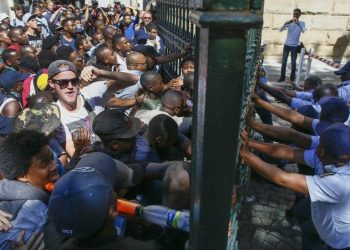
    Tensions flared in Lenasia, south of Johannesburg, on Tuesday as residents clashed with Johannesburg Metro Police Department (JMPD) officers during an operation to disconnect illegal water connections. The area has been grappling with severe water shortages, and authorities allege some residents are using unauthorized connections to access water.

    The standoff escalated when residents blocked major roads, including a section of the Golden Highway, to protest the disconnections, leading to the damage of four vehicles. Community leader Fanelwa Mooi voiced frustration over the lack of alternative water provisions, noting that no water tanks or trucks were provided to meet residents’ needs. “All the taps are dry,” Mooi said, adding that the community intends to meet with officials to seek solutions.

    Elsewhere, in Limpopo, members of the Economic Freedom Fighters (EFF) are set to march to the Premier’s office in Polokwane to demand urgent action on the ongoing water crisis. EFF’s Limpopo Chairperson Lawrence Mapoulo described the situation as “catastrophic,” highlighting the widespread lack of water access in the area.

    The water crisis in South Africa continues to deepen, fueled by increased demand, deteriorating infrastructure, climate change impacts, and illegal connections. Gauteng Premier Panyaza Lesufi has stated that law enforcement will be mobilized to prevent further water wastage as authorities work to address these mounting challenges.

    BY: MOSES DESIRE KOUYO

  • AGOA at the Crossroads: South Africa’s Balancing Act in U.S. Trade and Global Alliances

    AGOA at the Crossroads: South Africa’s Balancing Act in U.S. Trade and Global Alliances

    As the United States heads to the polls, South Africa’s economic relationship with the U.S. sits at a crossroads, with the fate of the African Growth and Opportunity Act (AGOA) hanging in the balance. With President Cyril Ramaphosa’s government of National Unity (GNU) walking a fine line between maintaining historical alliances and championing independent foreign policy, this moment presents an opportunity—and a challenge—for South Africa to reinforce its stance on the global stage while securing economic stability.

    The AGOA Legacy: A Critical Economic Lifeline

    Since its inception in 2000, AGOA has served as a critical foundation for U.S.-Africa trade relations, offering sub-Saharan African nations, including South Africa, duty-free access to the U.S. market on thousands of products. For South Africa, AGOA has been a significant economic boon, boosting exports of automobiles, wine, citrus, and precious minerals to the U.S. market. In 2022, U.S. imports from South Africa reached $14.6 billion, with South Africa benefiting from AGOA’s provisions on products like automotive goods, chemicals, and steel.

    Should AGOA’s renewal falter, South Africa’s economy could face a series of ripple effects. Brookings Institution estimates suggest that while the impact may seem modest at a macro level—a potential dip in GDP by approximately 0.1%—key sectors like food and beverage exports, automotive, and textiles could see much steeper declines. With the United States accounting for roughly 10% of South Africa’s total exports, these figures underscore how AGOA supports thousands of jobs and forms a vital revenue stream for the nation’s industries.

    Rising Tensions: The Nonalignment Dilemma

    South Africa’s alignment with BRICS, especially with increasing ties to China and Russia, has spurred concern in Washington. Long seen as a champion of nonalignment, South Africa’s recent foreign policy moves have cast doubt in the eyes of U.S. legislators about its adherence to a balanced diplomatic approach. Several U.S. lawmakers now propose reconsidering South Africa’s eligibility for AGOA, citing its closer diplomatic relations with Russia and its recent nonalignment positions in global conflicts, such as the Ukraine war.

    South Africa’s GNU government, facing its own internal complexities, has advocated strongly for preserving its AGOA status. President Ramaphosa and Trade Minister Parks Tau have repeatedly underscored AGOA’s economic importance, lobbying the U.S. for early and clear reauthorization of the agreement to maintain policy stability. For South Africa, the implications of exclusion from AGOA extend beyond trade; such a move could alter the perception of U.S.-Africa relations and influence other African countries considering or already within the BRICS sphere.

    AGOA’s Strategic Importance: Minerals, Commodities, and Economic Diplomacy

    A critical element of the AGOA conversation is the reliance of the U.S. on South African resources, especially in sectors like critical minerals. South Africa supplies nearly 100% of the U.S. demand for chromium and a substantial share of manganese, platinum, and titanium. As the U.S. pursues alternative, resilient supply chains in an increasingly multipolar world, these resources remain strategically vital. Any disruption in AGOA could lead the U.S. to reevaluate its imports from South Africa, but it could also force American industries to secure alternative sources of these essential minerals.

    Looking Ahead: South Africa’s Role in an Evolving World Order

    Whether the next U.S. administration moves toward an AGOA extension or opts to restrict South Africa’s access to the program, the experience signals an urgent need for South Africa to clarify its role within the evolving global power structure. As the GNU works to reconcile differing views within its coalition—many of which have implications for South Africa’s foreign and economic policy—South Africa’s leadership must communicate a consistent and forward-looking vision.

    While the future of AGOA remains uncertain, South Africa’s actions in this moment could establish its position in a more equitable world order, where African nations are not simply stakeholders but central players in shaping global economic policy. For South Africa, the challenge is not merely to retain AGOA privileges, but to chart a path that preserves its autonomy and aligns with Africa’s broader aspirations for self-determination, sovereignty, and mutual prosperity.

  • First Results Announced from South Africa Election

    First Results Announced from South Africa Election

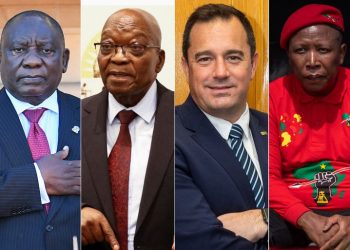
    The first results from South Africa’s closely contested elections have been released. With around 14% of the voting districts counted, the African National Congress (ANC) leads with 43%, followed by the Democratic Alliance (DA) at 26%. The Economic Freedom Fighters (EFF) and the uMkhonto weSizwe Party (MK Party), led by former President Jacob Zuma, are both at approximately 8%.

    Final results are expected over the weekend. Opinion polls suggest the ANC might lose its parliamentary majority for the first time in 30 years, potentially forcing it into a coalition. The ANC’s support has waned due to widespread dissatisfaction over corruption, crime, and unemployment, but predicting the final outcome remains premature.

    Election day saw long lines of voters at polling stations well into the night across the country. A Johannesburg electoral official compared the turnout to the historic 1994 election when black South Africans could vote for the first time, leading to Nelson Mandela’s presidency. Although polls officially closed at 21:00 local time (19:00 GMT), the electoral commission ensured that all waiting voters could cast their ballots.

    A record 70 parties and 11 independents contested this election, highlighting widespread disillusionment with the ANC. Political analyst Richard Calland remarked, “We are entering the next phase of our democracy, and it is going to be a big transition. We will either become a more competitive and mature democracy, or our politics will become more fractured.”

    The DA has preemptively signed a pact with 10 other parties, agreeing to form a coalition government if they garner enough votes to oust the ANC. However, the ANC is expected to remain the largest party and likely to lead a coalition if it falls below 50% support. In the last election, the ANC secured 57.5% of the vote, while the DA received 21%.

    South Africans vote for parliamentary members who then elect the president. Hence, President Cyril Ramaphosa is expected to stay in power. Former President Jacob Zuma, despite being barred from running due to a contempt of court conviction, is leading the MK Party, which is projected to perform well in his home province of KwaZulu-Natal. This region has seen high tensions and some violence during the campaign. To ensure peaceful voting and the security of ballot papers, police and the army have been deployed nationwide.

    More than 27 million people registered to vote, including many young voters who could be decisive. Artist Njabulo Hlophe, 28, stressed that young people often feel marginalized but emphasized the importance of their vote. Elderly voter Elayne Dykman, 89, expressed hope that the youth do not take their voting rights for granted.

    The diverse array of political opinions and the high voter turnout reflect a pivotal moment in South Africa’s democratic journey, with the potential for significant political change on the horizon.

  • South Africa’s Electoral Court Allows Former President Jacob Zuma to Run in Upcoming Election

    South Africa’s Electoral Court Allows Former President Jacob Zuma to Run in Upcoming Election

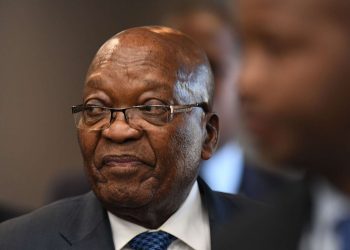
    South Africa’s Electoral Court has overturned a previous decision, granting former President Jacob Zuma eligibility to run for office as a lawmaker in the upcoming election.

    This ruling sets the stage for Zuma to potentially contest the presidency under the banner of the uMkhonto weSizwe Party, which he joined after parting ways with the ruling African National Congress.

    Initially barred from candidacy due to a criminal record, Zuma’s successful appeal clears the path for his participation despite past legal challenges.