Category: Opinion

  • Renaming and Politicization of Public Universities; a Worrying Development!

    By Opare Philip Israel Junior

    In the last few years, we have seen a trend of incumbent administrations rename some public universities after political figures. While some persons continue to support this worrying trend for political reasons, I abhor it. I will explain why.

    First off, in the Ghanaian cultural setting, names do not only convey a sense of physical identity, they also give spiritual importance. For universities, names are highly significant because they carry institutional visions, shape reputation and stimulate alumni pride. It is for these reasons why the incessant trend of renaming public universities after political figures must be shunned.

    Under the erstwhile Akufo Addo administration, several public universities were renamed.
    Prominent among them were :

    1. The University of Development Studies, Wa, which was renamed Simon Diedong Dombo University of Business and Integrated Development Studies
    2. University of Mines and Technology, renamed George Grant University of Mines and Technology.
    3. University of Education, Kumasi Campus renamed Akenten Appiah Menka University of Skills Training and Entrepreneurial Development.

    In opposition, the NDC vouched to revert all universities renamed by Akufo Addo back to their original names. In sharp contrast, I am learning that the Ministry of Education under the leadership of the venerable Haruna Idrissu, has renamed the University of Health and Allied Sciences ( UHAS) after late President Mills.

    Do not get me wrong. President Mills was a great statesman and his contribution towards the establishment of UHAS can not be underestimated.
    In spite of this fact, it’s chuckling seeing the very people/ party who vilified Akufo for renaming some public universities after pro NPP figures perpetuate what they once considered a peccatum or sin.

    I am not against the idea of naming a newly built university after a political figure, especially when the figure is widely appreciated for his heroics. My issue is with renaming existing universities after political / partisan figures. In Ghana, a good number of our politicians are not nationalistic but partisan and that, sometimes they make policy directions to reflect their partisan orientation.

    You do not need a soothsayer to tell you that most of the agitation that followed the renaming of UMAT and UDS, Wa , after SD Dombo and George Grant, respectively, were made from a place of extreme partisanship. Some people felt that these closely highlighted individuals are Pro NPP/ UP/ UGCC figures and that by renaming the aforementioned universities, President Akufo Addo was blazingly honouring the memory of figures associated to his political tradition.

    Today, UHAS has been renamed after late Prof Mills, and people from the opposing divide have started waging spirited opposition to the decision by the Ministry of Education. Just as the NDC has promised to revert institutions renamed by Akufo Addo to their original names, I wouldn’t be surprised if a future NPP administration decides to strikeout Prof Mills’ name and revert back to UHAS or even name the university after a pro NPP figure . Then, this vicious cycle continues .

    What saddens my heart is that, in situations where the names of these longstanding universities are renamed after political figures, the government of the day does not build consensus with relevant stakeholders and seldom gives plausible reasons or justifications for the renaming.

    Like me , many students , alumni bodies and CSOs are yet to grasp the identities designated to these public universities, whose names have been altered.

    While renaming public universities may give some level of esteem to political/ partizan figures, it undermines institutional stability and may shrink public trust. The truth is, universities are glonacal institutions who are regionally impactful and globally relevant and for that reason , their names should not be treated like panties, which can be changed anytime one wishes.

    Whether it is George Grant University of Mines and Technology , Simon Diedong Dombo University of Business and Integrated Development Studies, Wa, or Professor John Evans Attah Mills University of Health and Allied Heath, the ambit remains the same . The renaming of these public universities appear to only give partisan capital consequently affecting the universities strategic positioning, branding and reputation.

    If our political class have forgotten, then they must be reminded that renaming public universities after political figures comes with a huge financial burden. In situations where a public university is renamed, changes are made to the institution’s signages, website letterheads, and relevant documents . All of these rebranding and strategic positioning come at a huge cost.

    At a time where the government of Ghana’s funding towards tertiary education is stagnant, must monies go into renaming at the expense of augmenting infrastructure and resourcing students ?

    Our political class must understand that their penchant for renaming public universities after their political figures can even confuse international partners and universities. A university that constantly changes its name may not be taken serious in the comity of universities .

    We must also not lose sight of the fact that these renaming of public universities have the propensity of creating confusion in the minds of alumni and current students who want to study abroad. For instance, a person who graduated from UHAS and intends to apply to study abroad this year, may battle with the difficulty of identifying as a former UHAS student or Prof John Evans Atta Mills University of Health and Allied Sciences.

    Additionally, if a final year student at UHAS has already applied to study abroad by submitting a UHAS inscripted transcript , and upon graduation he is given a Prof JEA Mills UHAS certificate, that might lead to some discrepancies in the application process. If the foreign university does not ask for an attestation to clear off doubts, that could affect the student chances .

    This is the opportune time for this country to have a policy that regulates when and how universities can be renamed.
    This must encompass the participation of university administrators , alumni, students , governing councils and other relevant stakeholders in the Ghanaian educational ecosystem.

    In conclusion, this troubling trend of renaming state universities after political figures must cease. If indeed the political class want to honour their political figures, they can exploit other areas , such as setting up scholarship schemes in their name, building halls, and auditoriums and naming them after the political figures.

    I do not think anyone would have made a fuss, if Akufo Addo built an auditorium at UMAT and named it after George Grant or if Mahama had built a block at UHAS and is naming it after Prof Mills.

    May God bless our homeland Ghana and make our political class think beyond partisanship.

  • Ibrahim Traoré: Burkina Faso’s Revolutionary Firebrand Lighting a New Path for Africa

    By Moses Desire Kouyo

    In the parched, golden plains of Burkina Faso, a familiar revolutionary spirit is stirring again.
    This time, it is not Thomas Sankara astride his motorbike rallying a continent’s dreams, it is Captain Ibrahim Traoré, the youngest leader in Africa, carrying the torch of defiance and hope into a turbulent 21st century.

    At just 35 years old, Traoré has become the face of a new African awakening, bold, unbowed, and unapologetically Pan-African.


    The Rise of a Soldier-Scholar

    Born in the small village of Bondokuy, Ibrahim Traoré grew up in a Burkina Faso still grappling with the ghosts of colonialism and the long shadows of economic dependency.
    He was a boy when the revolutionary Thomas Sankara spoke of a free Africa charting its destiny, words that seem to have burned themselves into Traoré’s spirit.

    Choosing to serve, Traoré studied geology at the University of Ouagadougou but answered the higher call of the military.
    His rise through the ranks was marked by discipline, a fierce intellect, and a growing disillusionment with leadership that appeared more loyal to Paris than to Ouagadougou.

    By 2022, as jihadist violence threatened to tear his nation apart and Western promises yielded little but drones and bureaucracy, Traoré, backed by soldiers and a frustrated citizenry, seized leadership from a faltering government.
    To many, he was not a usurper; he was a savior.


    A New Sankara?

    Comparisons between Traoré and Sankara are inevitable — and Traoré does not shy from them.
    Like Sankara, he dresses in simple military fatigues, speaks directly to the people, and prioritizes national sovereignty over foreign approval.

    But Traoré’s revolution is not a carbon copy.
    Where Sankara fought the imperialism of the Cold War era, Traoré battles the subtler chains of modern neocolonialism: foreign troops on African soil, Western-backed debt traps, and media narratives shaped in Paris and Washington.

    In one symbolic stroke, Traoré expelled French troops from Burkina Faso, ending decades of “cooperation” that many saw as thinly veiled control.

    Radio France Internationale and Jeune Afrique were also banned for spreading what the government called “disinformation and psychological operations.”

    Instead, Traoré has courted new partnerships on Burkina Faso’s terms, looking East to Russia, China, and Turkey not as vassals, but as equal actors in a multipolar world.


    Economics of Liberation

    Traoré’s vision for Burkina Faso is economic as much as political.

    No longer willing to be a mere pit stop for gold extraction by foreign multinationals, he ordered the creation of Burkina Faso’s first national gold refinery, aiming to keep the nation’s wealth in Burkinabè hands.
    New laws now demand that a portion of all extracted gold remains within the country, financing development projects, not distant shareholders.

    In agriculture, Traoré has reinvested in local farmers, distributing thousands of tractors and launching initiatives to end Burkina Faso’s dependence on imported food.
    Where past governments offered slogans, Traoré’s Burkina Faso plants seeds.

    At the heart of this is a philosophy Sankara would recognize: self-reliance, dignity, and control of African destiny.


    The Clash with Langley and the West

    Traoré’s independence, however, has not gone unnoticed — or unchallenged.

    Recently, U.S. General Michael Langley accused Burkina Faso of trading gold to fund mercenaries, hinting darkly at Russian influence in the Sahel.
    The accusation, widely viewed across Africa as a smear tactic, provoked fierce backlash.

    Traoré, unflinching, dismissed the claims as another attempt to tarnish African sovereignty under the tired pretext of “security concerns.”
    His supporters point out the hypocrisy of Western powers, who themselves have long extracted African wealth without apology.

    For millions of young Africans watching, Traoré’s refusal to bow — to Washington, Paris, or any foreign master — feels like a long-overdue roar.


    A Pan-African Awakening

    Beyond Burkina Faso, Traoré’s rise signals a deeper shift across Africa.

    He stands alongside other young, revolutionary-minded leaders in Mali, Niger, Guinea, rejecting old alliances and forging new identities grounded in African pride, solidarity, and a refusal to be mere pawns in global games.

    In his speeches, Traoré does not just speak of Burkina Faso.
    He speaks of Africa, sovereignty, and a future where Africans set the agenda.

    Under his watch, Burkina Faso has deepened ties with its Sahel neighbors through the Alliance of Sahel States, a military and economic pact rejecting foreign intervention and vowing to defend mutual interests.


    The Challenges Ahead

    To his critics, Traoré is naive, authoritarian, or courting isolation.
    To his supporters and many Africans weary of broken promises, he is a generational voice articulating what they have long felt:
    Africa must govern itself, defend itself, and develop itself or remain perpetually dependent.

    Traoré faces immense challenges: a persistent jihadist threat, economic hardships, and global pressure.
    But if history teaches anything, it is that revolutions are never smooth and leadership, when authentic, often demands walking through fire.


    A New Chapter

    In Ibrahim Traoré, the spirit of Sankara finds a modern heir.
    Not because he imitates the past but because he dares to imagine Africa’s future.

    Beneath the Sahel sun, amid the swirling dust and stubborn hopes of his people, a new chapter is being written —
    one led by Africans, for Africans, and in the language of freedom, dignity, and rebirth.

    The world may watch with suspicion.
    But across the continent, millions are daring to hope again.

    And hope, once lit, is not easily extinguished.

  • Tribute to my Friend and Mentor, Tun Daim Zainuddin, Former Finance Minister of Malaysia

    Tribute to my Friend and Mentor, Tun Daim Zainuddin, Former Finance Minister of Malaysia

    By Dr. Ken Kwaku

    In the early hours of November 13, 2024, the world lost a giant, and I lost a friend, a mentor, and a guiding light. Tun Daim Zainuddin was not only a pillar of Malaysia but also a bridge to Africa—a continent he championed and believed in like few others from his part of the world.

    From our first meeting in the 1990s, Tun Daim became more than just a friend to me; he was my ultimate mentor. It is difficult to convey the depth of wisdom, warmth, and vision he shared, which continually inspired me. During my tenure as the Director of the Multilateral Investment Guarantee Agency (MIGA) of the World Bank Group for Africa, his insights and encouragement shaped my strategic approach, empowering countless others across the globe.

    Tun Daim saw Africa not merely as a land of potential but as an essential partner in progress. A lifelong advocate of South-South cooperation, he promoted partnerships and provided scholarships to countless students from Tanzania to Senegal, opening doors to brighter futures. His commitment to development extended to building schools and mosques, fostering both education and faith in communities where they were most needed.

    At a time when few recognized the strategic importance of Asia-Africa business cooperation, Tun Daim and I worked closely to make this vision a reality. Decades ago, we joined forces with other like-minded leaders, including Dr. Ngozi Okonjo-Iweala, now the Director-General of the WTO, to advance trade and investment between Africa and Asia. He founded the International Commercial Bank (ICB) and appointed me as the only African to serve on its Global Board. By the early 2000s, the bank had a presence in more than seven African countries, creating pathways for business growth, trade, and economic development that solidified ties between our continents.

    Through his leadership, Tun Daim laid the foundation for enduring economic partnerships between Malaysia and African nations. He brought Malaysian companies to invest in Africa, driving growth in sectors like infrastructure, agriculture, and natural resources. His unshakable belief in the power of unity between Africa and Asia led to initiatives such as the Malaysia-Africa Business Forum and the African-Asian Business Forum, which he championed as keys to shared prosperity. Indeed, South-South cooperation has lost an iconic champion.

    Beyond his business acumen, Tun Daim was profoundly concerned about the efficiency of government and public service. He didn’t hesitate to share his wisdom with heads of state, emphasizing time management and the importance of strategic focus. His commitment to excellence was a gift he shared with the world, inspiring leaders to strive for more efficient and effective governance.

    He was a man who transcended political and economic boundaries. In South Africa, Nigeria, Egypt, and across other parts of the African continent, including Ghana, Tanzania, Guinea, Senegal, and the Central African Republic, his influence opened doors, his encouragement fostered partnerships, and his heart built friendships. With each visit, each meeting, and each handshake, he deepened the bond between two worlds. His vision and persistence made Malaysia’s presence in Africa not just about investment but about genuine, sustainable development.

    Tun Daim’s legacy is not merely written in the agreements he signed or the projects he launched; it lives on in the countless lives he touched, the futures he believed in, and the hope he inspired in so many. As I mourn the loss of this extraordinary man, I am reminded of the countless conversations we shared—the laughter, the lessons, and his words: “Ken, real success is not what we achieve, but what we inspire others to achieve.” Tun Daim achieved much, but what he inspired in Africa, in Malaysia, and in my own heart is beyond measure.

    To his family, his friends, and all who knew and loved him: his light will continue to shine across continents, across generations, in the spirit of every dream he helped bring to life. My dear friend, Tun Daim, thank you for everything.

    Rest in Perfect Peace.

    Dr. Ken Kwaku
    Accra, Ghana

  • Sahel Alliance Urges UN Security Council Action Amid Controversial Remarks by Ukrainian Official

    Sahel Alliance Urges UN Security Council Action Amid Controversial Remarks by Ukrainian Official

    In a televised statement, Andriy Yusov, a spokesperson for Ukraine’s military intelligence agency, claimed that Malian rebels received the “necessary” information to carry out a recent attack. This attack, claimed by Tuareg rebels in late July, reportedly resulted in the deaths of 84 Russian Wagner mercenaries and 47 Malian soldiers. However, Yusov later retracted his statement.

    In response, the foreign ministers of the Alliance of Sahel States (AES) have sent a letter to the UN Security Council president, urging the council to take measures against potential subversive and destabilizing actions. They expressed concern that comments by Ukrainian officials are contributing to the spread of terrorism in the Sahel region. The UN Charter designates the Security Council as the primary body responsible for maintaining international peace and security.

  • Benin Arrests Nigeriens at Seme Port, Escalating Border Dispute

    Benin Arrests Nigeriens at Seme Port, Escalating Border Dispute

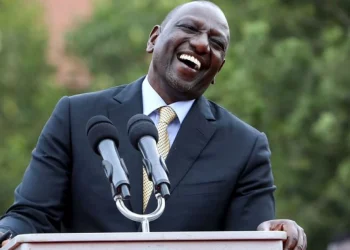
  • President Ruto Has Deceived Africans -Kenya Is Not Visa-Free.

    President Ruto Has Deceived Africans -Kenya Is Not Visa-Free.

    On 12th December 2023, President William Ruto of Kenya declared that Kenya would be it was a free country beginning January 2024. There was a lot of excitement across Africa about this announcement as many consider this to be a good and exciting progress towards free movement of Africans.

    A lot of people who follow our borderless Africa campaign suggested that we made a public statement commending president Ruto for such a move. I said to them, let’s wait and see the implementation because if you know president Ruto, he gives traffic indicator for the right and then takes a left turn.

    Lo and behold here we are March 2024 and Kenya is not visa free for Africans. There were two clues in the statement that the president made that many people did not pay attention to

    1. He mentioned that Kenya’s visa-free applied to everybody from everywhere in the world, not just Africans first stop. This was the first indication that the intention was not what we thought.
    2. He again mentioned that travelers would seek and receive an Electronic Travel Authorization (ETA) before entering Kenya.

    Fellow Africans, Ruto’s electronic travel authorization (ETA) is a visa with another name. Let me tell you my experience. Before the introduction of that ETA, I did not need visa to travel to Kenya nor did I need to fill any forms or pay any money for anything just my flight tickets.

    This was the case with about 21 countries in Africa whose passports did not need any visa to enter Kenya. However, for my trip to Kenya in 2024, I had to apply for the electronic travel authorization and pay a fee of $34 U.S. dollars.

    The application required every information that a visa requires. After you have applied you can get your authorization within 72 hours or more but without it you cannot travel to Kenya, the airline will not even allow you to board the plane.


    These are all features of a visa. So Africans were deceived by William Ruto and the ETA is a visa. All those countries that did not need visa to enter Kenya based on bilateral agreements now have to obtain this visa before they can enter Kenya. Certain countries in the East African Community and a couple in Southern Africa are exempted from paying the fees but still have to apply.

    This is a retrogression. We must call on the Kenya government to reverse this policy, which is a new form of restriction on free movement in Africa and an obstacle to a #BorderlessAfrica.

  • Togo postpones elections after new constitution row

    Togo postpones elections after new constitution row

    Amid tensions sparked by controversial constitutional reforms, Togo has decided to postpone parliamentary and regional elections. The reforms, endorsed by lawmakers last week, replaced the presidential system with a parliamentary one, thereby transferring executive power to the prime minister and relegating the presidency to a symbolic role.

    Opposition parties have vehemently opposed the reform, fearing it could perpetuate President Faure Gnassingbé’s hold on power. Gnassingbé assumed office following the death of his father, Gnassingbé Eyadéma, who ruled Togo with an iron fist for 38 years until his demise in 2005.

    Originally scheduled for April 20, the elections’ postponement was announced by the presidency on Wednesday, without specifying a new date. The move has sparked a call from the Conference of Togolese Catholic bishops urging President Gnassingbé not to sign the constitutional amendments into law, advocating instead for a broader consultation and inclusive national debate.

    Under the revised system, the president will be appointed by parliament for a single six-year term, rather than being directly elected. With opposition parties boycotting previous elections and having limited representation in parliament, the constitutional changes were passed nearly unanimously, with only one legislator dissenting.

    The presidency cited the need for “consultations” over the contested reforms as the reason for the election delay. This decision follows President Gnassingbé’s recent move to send the disputed law back to parliament for a second reading in response to growing criticism.

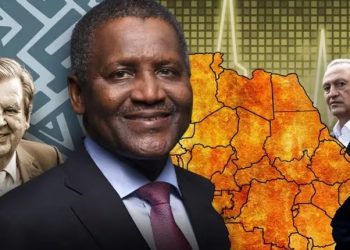
  • 10 richest people in Africa in Q1 2024

    10 richest people in Africa in Q1 2024

    Amidst the whirlwind of economic shifts sweeping across the African continent, the fortunes of its wealthiest individuals have undergone significant transformations. At the dawn of 2024, Johann Rupert & Family claimed the mantle of Africa’s richest, wielding a formidable net worth of $10.3 billion. Yet, Aliko Dangote, not to be outdone, trailed closely with a substantial $9.5 billion to his name. Fast forward to the present, and the tides have turned dramatically. Dangote’s fortune has surged to an impressive $15.1 billion, relegating Rupert & Family to a trailing position with $11.2 billion.

    In this fluid landscape of wealth, notable shifts have occurred. Issad Rebrab & Family, once a stalwart on Africa’s top 10 billionaire list with a fortune of $4.6 billion, has now bowed out, making way for Koos Bekker, who ascends to elite status with a worth of $2.7 billion.

    Meanwhile, the narrative of Nigerian tycoon, Mike Adenuga, unfolds as a tale of remarkable ascent. Starting the year as the 10th richest with $3.1 billion, Adenuga now commands a staggering $6.9 billion, securing the coveted 6th position among Africa’s wealthiest.

    Below stands the revised roster of Africa’s 10 richest individuals in Q1, 2024:

    Rank | Name | Net Worth | Country | Industry | Global Rank


    1 | Aliko Dangote | $15.1 billion | Nigeria | Cement, Sugar | 129th


    2 | Johann Rupert & Family | $11.2 billion | South Africa | Luxury goods | 228th


    3 | Nicky Oppenheimer & Family | $9.5 billion | South Africa | Diamonds | 256th


    4 | Nassef Sawiris | $8.9 billion | Egypt | Construction and investments | 287th


    5 | Nathan Kirsh | $7.1 billion | Eswatini (Swaziland) | Retail, real estate | 384th


    6 | Mike Adenuga | $6.9 billion | Nigeria | Telecom, oil | 407th


    7 | Abdulsamad Rabiu | $6.3 billion | Nigeria | Cement, Sugar | 461st


    8 | Naguib Sawiris | $3.8 billion | Egypt | Telecom | 846th


    9 | Mohamed Mansour | $3.2 billion | Egypt | Diversified | 1039th


    10 | Koos Bekker | $2.7 billion | South Africa | Media, investments | 1255th

    This dynamic landscape underscores the fluidity of wealth in an ever-evolving economic ecosystem, where fortunes rise and fall amidst the shifting sands of prosperity.

    By: Moses Desire Kouyo- Broadcast Journalist

  • Gcaba brothers respond to latest allegations in AKA murder case

    Gcaba brothers respond to latest allegations in AKA murder case

    The influential Gcaba family of South Africa has firmly denied speculation linking one of its members to the murder of popular rapper AKA.

    AKA, known by his real name Kiernan Forbes, along with his close friend Tibz Motsoane, tragically lost their lives in a shooting outside a Durban restaurant in February of the previous year.

    During the trial of the suspected perpetrators last Wednesday, prosecutors implicated Sydney Mfundo Gcaba, a member of the Gcaba family, in the rapper’s murder. They presented a statement alleging that one of Mr. Gcaba’s companies transferred over 800,000 rand ($42,000; £33,000) to the bank account of Mziwethemba Harvey Gwabeni, one of the individuals on trial for the rapper’s killing.

    Reports emerged suggesting that the payment occurred shortly after AKA’s murder, fueling suspicions that Mr. Gcaba might have orchestrated the payment to the suspects.

    However, the prosecution failed to provide evidence that Mr. Gwabeni rendered any services in exchange for the money.

    In response to these allegations, the Gcaba family released a statement on Sunday, asserting that the transaction was part of several business dealings between Mr. Gcaba and Mr. Gwabeni. They emphasized that these transactions were routine and had occurred over an extended period.

    The family expressed their concern over authorities’ failure to seek Mr. Gcaba’s perspective on the matter but affirmed his readiness to cooperate fully to clear his name of any wrongdoing.

    By: Moses Desire Kouyo- Broadcast Journalist